Why Boat Insurance Claims Get Denied
Boat insurance claims get denied far more often than most owners expect. The reasons are usually preventable. After 25 years of handling marine insurance claims across South Florida, I have seen the same mistakes repeated by boat owners in Lauderdale-by-the-Sea, Dania Beach, and everywhere along the coast.
Insurance companies are businesses. They collect premiums and pay out as little as possible. Every claim that crosses their desk gets scrutinized for reasons to deny or reduce the payout. The mistakes below give them exactly what they are looking for.
Some of these errors happen before you even file the claim. Others happen during the process. All of them can cost you thousands of dollars or result in a complete denial. Here are the seven most common mistakes and how to avoid each one.
Mistake 1: Waiting Too Long to Report the Damage
Late reporting is one of the easiest ways for an insurer to deny your claim. Most marine insurance policies require "prompt notice" of a loss. While the exact definition of "prompt" varies by policy and jurisdiction, waiting weeks or months gives the insurer a strong argument that you failed to meet your obligations.
Why it matters. Delayed reporting allows conditions to change. Damage can worsen from exposure. Evidence disappears. The insurer will argue they were prejudiced by the delay because they could not inspect the original damage.
What to do instead. Report the loss to your insurance company within 24 to 48 hours of discovering the damage. You do not need a complete damage assessment to file the initial report. Provide the date, location, and a general description of what happened. Follow up with detailed documentation as you gather it.
If you have already delayed and are worried about your claim, contact a marine claims professional before making the report. There are ways to present a delayed claim that reduce the risk of denial, but timing matters.
Mistake 2: Not Documenting the Damage Before Repairs
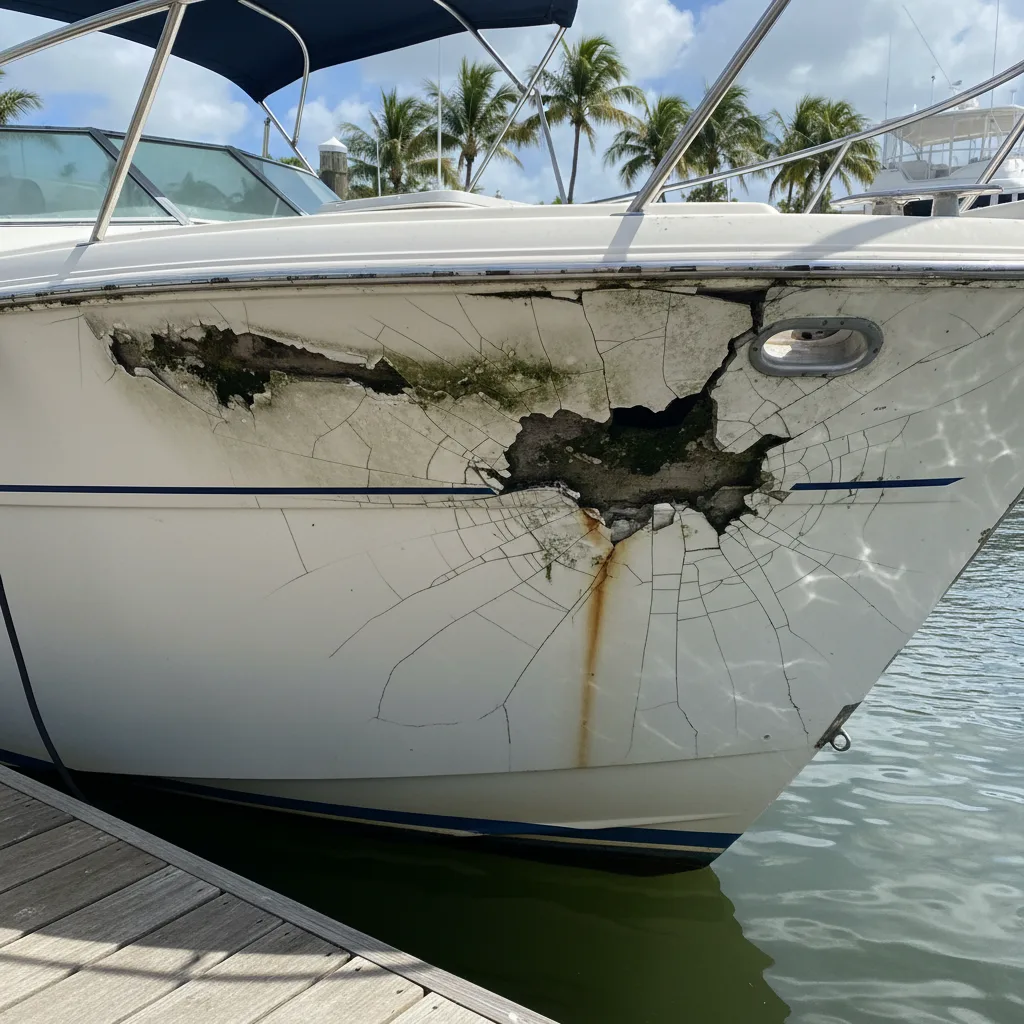
Starting repairs before thoroughly documenting the damage is a costly mistake. Once you fix something, the physical evidence of the original damage is gone. The insurer cannot verify what you are claiming, and they will use that against you.
Why it matters. Insurance adjusters rely on physical evidence to assess claims. Photographs, video, and survey reports taken before any work begins are your proof. Without them, the insurer controls the narrative about what happened and how much the repair should cost.
What to do instead. Before anyone touches your boat, document everything. Take wide-angle photos of the entire vessel, then close-ups of every damaged area. Shoot video walkarounds. Note the date and time of each photo. If damage is below the waterline, coordinate a haul-out for inspection and document what you find.
Emergency repairs to prevent further damage are fine and usually required under your policy's mitigation clause. But photograph the damage before making temporary fixes, and keep every receipt. A free damage assessment from a qualified marine surveyor ensures nothing is missed before repairs begin.
Mistake 3: Giving a Recorded Statement Without Preparation
Your insurance company may ask you to provide a recorded statement about the loss. Many boat owners agree without thinking twice, and that recording becomes a tool the insurer uses to limit the claim.
Why it matters. A recorded statement locks you into a specific version of events. If you misspeak, guess at details, or contradict something in your written claim, the insurer will use the inconsistency to deny or reduce your payout. Adjusters are trained to ask questions that steer you toward answers that help the insurer, not you.
What to do instead. You may be required to provide a recorded statement under your policy's cooperation clause. But you have the right to prepare first. Review your documentation, your policy, and the facts before the call. Stick to what you know. If you do not remember something, say so. Do not guess or speculate.
Better yet, have professional representation present during the statement. A marine public adjuster or attorney can ensure the questions stay fair and that your answers do not inadvertently harm your claim. Our team at Public Yacht Adjusters routinely prepares clients for recorded statements.
Mistake 4: Not Reading Your Policy Before Filing
Most boat owners have never read their marine insurance policy. They know the premium and the deductible, but they do not understand the coverage terms, exclusions, or conditions that determine whether a claim gets paid.
Why it matters. Your policy is a contract. The insurer will enforce every clause, condition, and exclusion in that contract. If you file a claim for something that is excluded, or if you fail to meet a policy condition, the insurer has a contractual right to deny the claim. Ignorance of your own policy is not a defense.
What to do instead. Have a professional review your policy with you before you need it. Marine policy language is dense and specialized - most boat owners are not equipped to interpret named-storm deductibles, navigational limits, lay-up periods, Seaworthiness Warranty provisions, agreed-value vs actual-cash-value distinctions, or "perils of the sea" exclusions on their own. We read policies for clients as part of our consultation.
If you are already dealing with a claim and are not sure what your policy covers, our frequently asked questions cover common policy scenarios, or request a professional policy review as part of our claims process.
Mistake 5: Accepting the First Offer Without Questioning It
The first settlement offer from an insurance company is almost never the best offer. It is a starting point designed to close the claim quickly and cheaply. Accepting it without pushback is one of the most expensive mistakes boat owners make.
Why it matters. Insurers know that many boat owners are stressed, tired, or unfamiliar with the claims process. A quick offer feels like relief. But that offer is typically based on the insurer's own damage assessment, which uses lower labor rates, cheaper parts, and aggressive depreciation calculations. The gap between the first offer and the actual cost of proper marine repairs can be considerable.
What to do instead. Don't accept the first offer. Don't negotiate alone. Call us - we obtain estimates from top-tier marine repair facilities, compare them line-by-line against the insurer's estimate, identify every discrepancy, and push back with documented evidence the carrier cannot dismiss. Boat owners in Sanibel and the barrier islands routinely see insurer estimates that fall well below actual marine yard pricing.
Our firm has recovered 8 to 22 times the initial offer on hurricane boat damage claims across Florida. Bring us in early on contingency with no upfront cost.
Mistake 6: Failing to Maintain Your Vessel
Deferred maintenance is one of the most common grounds for claim denial in marine insurance. If the insurer can show that neglected maintenance caused or contributed to the loss, they will reduce or deny your claim.
Why it matters. Marine insurance covers sudden, accidental losses. It does not cover gradual deterioration, wear and tear, or damage resulting from lack of maintenance. If your engine fails because you skipped oil changes for three years, that is not a covered loss. If your hull blisters because you never applied bottom paint, the insurer will argue the damage was foreseeable and preventable.
What to do instead. Keep detailed maintenance records. Save receipts for every service, every haul-out, every part replacement. Maintain a log that shows regular engine servicing, bottom paint applications, zincs replacement, and systems checks. This documentation is your defense when the insurer tries to blame maintenance for storm damage or mechanical failure.
This becomes especially important when filing claims in areas with heavy salt exposure like Miami and the Florida Keys. Insurers in these markets aggressively attribute damage to corrosion and lack of maintenance whenever they can.
Mistake 7: Not Hiring Professional Representation
Trying to handle a marine insurance claim on your own is the mistake that enables all the others. You are going up against an insurance company with teams of adjusters, attorneys, and marine experts. Handling it alone puts you at a disadvantage from the start.
Why it matters. Insurance companies know the policy language, the claims process, and the tactics that reduce payouts. Most boat owners do not. That information gap costs boat owners money on every claim. The insurer's adjuster is not going to point out coverage you missed or tell you that your claim is worth more than their offer.
What to do instead. Contact a marine public adjuster before engaging with the insurance company, regardless of the claim's apparent size. Public Yacht Adjusters welcomes every inquiry and provides a free review of any available documentation. A qualified marine PA levels the playing field - we speak the insurer's language, we know the repair market, and we have the credentials to back up every position.
Public Yacht Adjusters is Florida's first marine-only public adjusting firm. Scott Gregory Virgin brings Certified & Accredited Marine Surveyor credentials and Certified Marine Investigator credentials with over 25 years in the marine industry. Every claim we handle is a boat claim. Call (305) 351-9194 or request a denied claims review to get started.