What to Do After a Hurricane Damages Your Boat
Hurricane Isaias, October 2026: If your boat or yacht was damaged when Isaias hit the Florida Panhandle, we are handling Hurricane Isaias boat and yacht damage claims across the region now.
South Florida hurricane season puts every boat owner on edge. When a storm hits, the damage can range from cosmetic scratches to total losses. The steps you take in the first 48 hours after the storm passes will shape your entire insurance claim.
Before anything else, make sure you and your family are safe. Once conditions allow, get to your vessel and start assessing the situation. If your boat was stored at a marina in Miami or along the coast, check with the marina operator about access and any facility-wide damage reports.
Your insurance company will scrutinize every detail. The more prepared you are from the start, the stronger your claim will be.
Documenting Hurricane Boat Damage the Right Way
Documentation is the foundation of any successful hurricane boat damage insurance claim in Florida. Grab your phone and start recording before you touch or move anything.
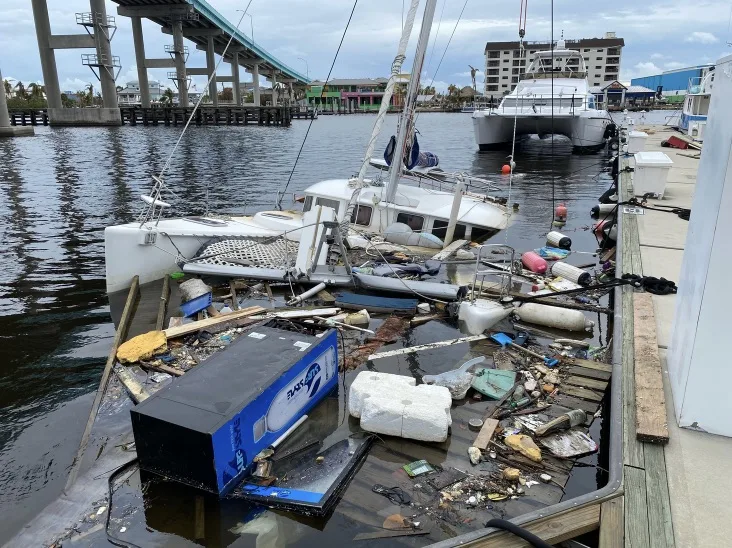
Take wide-angle photos showing the full vessel, then close-ups of every damaged area. Capture the hull, deck, electronics, rigging, sails, engines, and interior. Video walkarounds are especially useful because they show the full scope of damage in context.
Write down the date and time of every photo. Note weather conditions, water levels, and any debris around the vessel. If neighboring boats also sustained damage, photograph those too. It helps establish the severity of the storm at your location.
Keep every receipt from this point forward. Haul-out fees, temporary repairs to prevent further damage, storage costs, and survey expenses are all potentially recoverable. Insurers sometimes deny reimbursement for costs you cannot document, so save everything.
Contacting Your Insurance Company
File your claim as soon as possible. Most marine insurance policies require "prompt notice" of a loss, and waiting too long can give the insurer grounds to reduce or deny your claim.
When you call, stick to the facts. Report the date of the storm, the location of your vessel, and the types of damage you have observed. Do not speculate about repair costs or accept any verbal estimates from the adjuster. Everything should be in writing.
The insurer will assign their own adjuster to inspect your boat. That adjuster works for the insurance company, not for you. Their job is to settle claims for as little as possible. This is why many Fort Lauderdale and Miami boat owners bring in their own representation before the insurer's inspection happens.
Request a copy of your full policy, including all endorsements and exclusions. Read it carefully. Understanding what is and is not covered puts you in a much stronger position during negotiations.
Common Insurance Company Tactics on Boat Claims
Insurance companies have a playbook for minimizing hurricane claims. Engaging a professional representative like Public Yacht Adjusters early is the most effective way to counter those tactics - we do the pushing back on your behalf.
Lowball initial offers. The first number is almost never the final number. Insurers often present a quick settlement hoping you will accept before understanding the full extent of your damage. Rushing repairs based on an inadequate payout can leave you covering the difference out of pocket.
Blaming pre-existing conditions. Adjusters may argue that corrosion, wear, or prior damage caused the problems you are claiming. This is where your pre-storm maintenance records and survey history become critical evidence.
Depreciation disputes. Some policies pay actual cash value rather than replacement cost. The insurer's depreciation calculations are often aggressive. A marine claims specialist can challenge these numbers with market data and vendor quotes.
Delayed responses. Slow-walking a claim is a pressure tactic. When you are paying for storage or a slip while your boat sits damaged, the financial strain can push you toward accepting a lower offer just to resolve the situation.
Why Hire a Public Adjuster for Your Hurricane Claim
A public adjuster represents you, not the insurance company. That distinction changes everything about how your claim is handled.
Marine insurance policies are complex. Coverage terms for hull damage, machinery breakdown, salvage, and total loss calculations all involve specialized knowledge. A qualified marine public adjuster reads the policy language the same way the insurer does and uses it to your advantage.
Public adjusters handle the documentation, negotiate directly with the insurer, and coordinate with marine surveyors and repair facilities. For boat owners in Key West and throughout the Florida Keys, where hurricane exposure is highest, professional claim representation can mean the difference between a fair settlement and a fraction of what you are owed.
Public adjusters work on a contingency basis, so there is no upfront cost. Whatever the scale of your loss, a free damage assessment is the best place to start - we review any available documentation at no cost.
Avoiding Common Mistakes After Hurricane Boat Damage
The biggest mistake boat owners make is signing a release or accepting a settlement before they fully understand the damage. Hidden problems like water intrusion in the hull, electrical system corrosion, and engine damage from submersion often surface weeks or months after the storm.
Do not make permanent repairs until your claim is settled, unless they are necessary to prevent further damage. Temporary fixes are fine and often required under your policy's duty to mitigate. But once you repair and paint over storm damage, the evidence disappears.
Avoid giving recorded statements to the insurance company without understanding your rights. Anything you say can be used to limit your claim. If the insurer requests a recorded statement, consider having professional representation present.
Finally, do not assume your claim is too small for professional help. Even claims that seem straightforward can involve policy exclusions, depreciation disputes, or coverage gaps that reduce your payout significantly. Boat owners across Fort Myers and Southwest Florida deal with these issues every hurricane season.
How Long Do Hurricane Boat Claims Take in Florida?
Florida imposes claim-handling timelines on insurers for acknowledgment and coverage decisions. In practice, hurricane claims often take longer because of the volume of claims filed after a major storm, and your specific deadlines depend on your policy and current Florida rules.
Having organized documentation and professional representation can shorten the timeline. When your claim file is complete and well-supported, the insurer has fewer reasons to delay. If the repair process uncovers additional damage after the initial settlement, you may need to file a supplemental claim to recover those costs.
If your claim is being stalled or you have received a denial, do not wait. Contact a marine public adjuster or call us at (305) 351-9194 to discuss your options. Florida has strict deadlines for disputing claim denials, and missing those deadlines can cost you your right to recover.