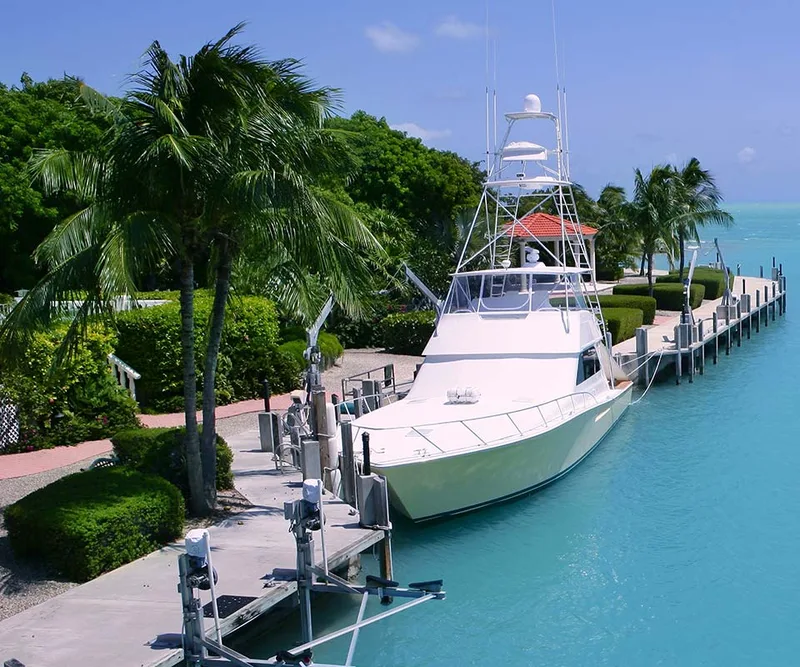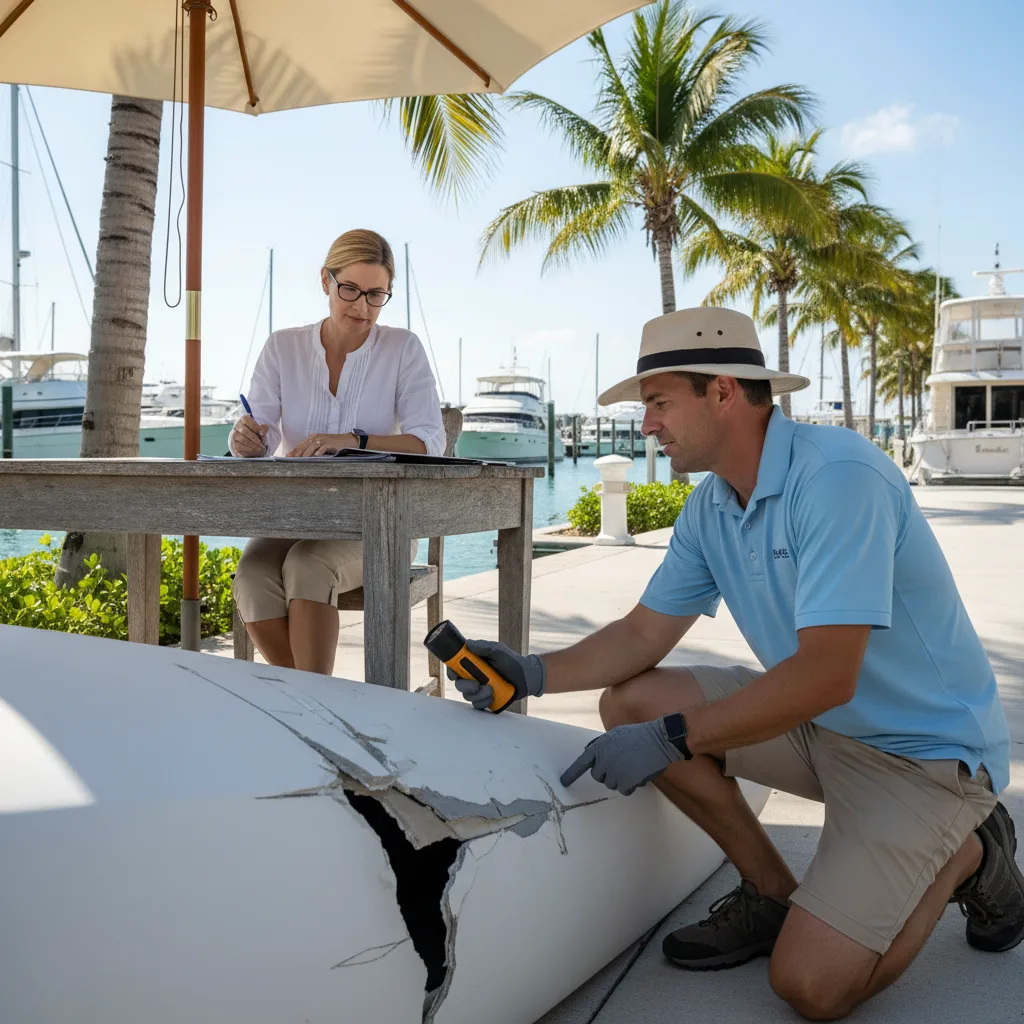
The Core Difference Between Public Adjusters and Insurance Adjusters
A public adjuster works exclusively for the policyholder. An insurance company adjuster works exclusively for the carrier. Every other difference between these two professionals flows from that single fact. When your boat sustains storm damage, fire damage, or mechanical failure covered by your policy, both types of adjusters will evaluate the loss. But they answer to different people with opposite financial interests.
The insurance company adjuster is an employee or contractor of your insurer. Their performance is measured partly by how effectively they control claim costs. A public adjuster is an independent, state-licensed professional you hire to represent your interests against the insurance company. In Florida, public adjusters must hold a separate state-issued license and carry their own errors and omissions insurance.
For marine insurance claims specifically, this distinction matters more than in any other insurance category. Boat damage involves specialized materials, labor markets, and repair processes that general adjusters rarely understand. The adjuster who represents you should know the difference between a lower unit rebuild and a full powerhead replacement, and how each is priced at a top-tier marine yard.
Side-by-Side Comparison: Public Adjuster vs Insurance Adjuster
This comparison breaks down the eight factors that matter most when your boat claim is on the line.
| Factor | Public Adjuster | Insurance Company Adjuster |
|---|---|---|
| Works For | You, the policyholder | The insurance company |
| Who Pays Them | You pay a contingency fee from the settlement | The insurance company pays their salary or contract fee |
| Financial Incentive | Higher settlement = higher fee | Lower settlement = better performance review |
| Licensing | Florida Department of Financial Services (separate PA license) | Company adjuster or independent adjuster license |
| Marine Expertise | Marine-specialized PAs have surveyor credentials | Typically handles auto, home, and boat claims |
| Claim Documentation | Builds maximum supported claim file | Documents to support the company estimate |
| Upfront Cost | Zero (contingency based) | Zero (paid by insurer) |
| Settlement Outcome | Consistently higher settlements documented industry-wide | Settlement aligned with company reserves |
The financial incentive row is the most telling. A public adjuster earns more when you receive more. An insurance adjuster has no financial reason to maximize your payout.
Why Marine Claims Need Specialized Adjusting
Marine insurance claims require specialized knowledge that most insurance adjusters do not have. A boat is not a car or a house. It operates in a corrosive saltwater environment, uses proprietary mechanical systems, and requires repair at specialized facilities with limited availability.
The average insurance company adjuster handles hundreds of claims per year across auto, home, and commercial lines. They may see a boat claim once or twice a year. That lack of frequency means they rely on generic estimating software and standardized labor rates that do not reflect the marine repair market in Hollywood or South Florida.
Marine-specific factors that general adjusters miss include: fiberglass delamination that requires core sampling to detect, saltwater intrusion in sealed electrical systems, engine corrosion patterns that indicate storm damage versus neglect, rigging tension loss on sailboats, and the difference between cosmetic gelcoat damage and structural laminate failure. Each missed item directly reduces your settlement.
A marine-specialized public adjuster brings surveyor-level knowledge to the claim process. They inspect the vessel the same way a marine surveyor would, then translate those findings into insurance claim language that the carrier cannot easily dispute.
How Insurance Company Adjusters Handle Boat Claims
Insurance company adjusters follow an internal process designed to resolve claims quickly and within predetermined reserve amounts. When your boat claim comes in, it gets assigned to a desk adjuster or field adjuster who may have little or no marine experience.
The adjuster reviews your policy, schedules an inspection (sometimes using a third-party vendor rather than visiting the vessel personally), and prepares an estimate. That estimate typically uses labor rates from insurance industry databases, which frequently fall well below what top-tier marine yards in South Florida actually charge.
Company adjusters are also trained to look for reasons to limit coverage. They will check for Seaworthiness Warranty issues, prior conditions, and apply depreciation aggressively when the policy allows it. None of this is illegal, but it results in estimates that consistently fall below actual marine repair costs.
On any sizable yacht damage claim, the difference between insurance company labor rates and actual market rates alone can account for substantial underpayment. Add in missed damage items, aggressive depreciation, and excluded line items, and the gap grows wider.
How a Public Adjuster Works Your Marine Claim
A public adjuster takes over the claim process from the moment you hire them. They review your policy, inspect the vessel, document every item of damage, obtain independent repair estimates, and negotiate directly with the insurance company on your behalf.
The process starts with a thorough vessel inspection. At Public Yacht Adjusters, our inspections cover hull and structural integrity, mechanical and propulsion systems, electrical and navigation electronics, interior and accommodation areas, rigging and deck hardware on sailboats, and cosmetic and gelcoat condition. We document with photography, video, and written findings that meet marine survey standards.
Next, we prepare a complete claim file with repair estimates from qualified marine facilities, not from insurance estimating software. We present this file to the insurer with specific policy language supporting each line item. When the insurance company pushes back, we have the technical documentation to counter their position.
Throughout the process, we handle all communication with the insurer. You do not have to negotiate, argue over repair costs, or worry about saying something that could be used against your claim. Boat owners in West Palm Beach and across South Florida consistently tell us that removing that stress alone was worth hiring a public adjuster.
Settlement Differences: The Numbers Tell the Story
Public adjusters consistently recover more than policyholders who handle claims on their own. On Hurricane Ian marine claims handled by Public Yacht Adjusters, we recovered between 8 and 22 times the insurer's initial settlement offers. Clients from Jupiter to the Keys have seen initial offers that reflected only a fraction of the actual cost to repair hull damage, engine saltwater intrusion, and electrical system replacement - and we closed those gaps by documenting what the carrier missed.
These gaps are not unusual in marine claims. If you suspect an unfair insurance payout, reach out to us. Insurers frequently undervalue boat damage because their adjusters lack the expertise to identify all damaged components. A public adjuster with marine surveying credentials catches damage that a general adjuster walks right past.
A contingency engagement means you pay nothing upfront and only a portion of what we recover. Read our verified reviews for how this works in practice.
When You Should Hire a Public Adjuster for Your Boat Claim
Reach out to a public adjuster whenever the insurer's offer seems low compared to actual marine repair estimates, whenever your claim involves mechanical or structural damage, or whenever your insurer has denied coverage for damage you believe is covered. Public Yacht Adjusters welcomes every inquiry and provides a free review of any available documentation.
You should also consider a public adjuster if you do not have time to manage the claim process yourself. Marine claims require extensive documentation, multiple inspections, ongoing negotiation, and coordination with repair facilities. Business owners and professionals across South Florida often find that the time commitment alone justifies hiring representation.
Early involvement produces better results. If you bring in a public adjuster before the insurance company completes their inspection, we can attend the inspection, ensure all damage is documented from the start, and prevent the insurer from locking in a low initial estimate. After the insurer has already committed to a number, the negotiation becomes harder.
The best time to call is immediately after you discover damage and before you file the claim. The second best time is right now, regardless of where your claim stands. A free damage assessment costs you nothing and tells you exactly where you stand.
Why Public Yacht Adjusters Is Different
Public Yacht Adjusters is Florida's first marine-exclusive public adjusting firm. We do not handle homes, businesses, or automobiles. Every claim we take involves a vessel, which means our entire operation is built around marine insurance expertise.
Scott Gregory Virgin, our principal adjuster, holds credentials as a Certified & Accredited Marine Surveyor and Certified Marine Investigator with over 25 years of marine industry experience. That background means we inspect vessels at a surveyor level and translate findings into insurance claim documentation that carriers take seriously. (Any formal marine survey work is handled separately through Miami Marine Survey, LLC - read the role disclosure for details.)
We work on contingency with no upfront fees. Our interests are directly aligned with yours because we only get paid when you receive a settlement. If your claim does not produce a recovery, you owe us nothing.
Whether you are dealing with hurricane damage, collision damage, engine failure, or a denied claim on any vessel type, we handle claims across all of Florida's coastal communities. Call (305) 351-9194 or schedule a consultation to get a marine claims specialist in your corner before the insurance company sets the terms of your settlement.